
Annulment requirements are the legal conditions and criteria that must be met for a marriage to be declared null and void by a court. Unlike divorce, which legally ends a valid marriage, annulment establishes that the marriage was never legally valid from the beginning due to specific issues such as incapacity, fraud, or illegality.
This legal process provides individuals with a way to address relationships that lack proper legal standing while restoring their status as if the marriage never occurred. The concept of annulment requirements plays a significant role in ensuring legal clarity, protecting individual rights, and maintaining the integrity of marriage laws.
By outlining clear grounds, eligibility criteria, and procedural steps, the law ensures that only genuinely invalid marriages are annulled. At the same time, these requirements balance fairness and accountability by requiring sufficient evidence and judicial oversight. Understanding annulment requirements is essential for individuals seeking closure, legal resolution, and the ability to move forward without the legal and social implications of a void or invalid union.
| Aspect | Description |
| Marriage void | |
| Purpose | Legal remedy |
| Incapacity | No consent ability |
| Fraud | Deception involved |
| Illegality | Law violation |
| Mental Illness | Impaired judgment |
| Underage Marriage | Age restriction |
| Bigamy | Existing marriage |
| Eligibility | Criteria required |
| Evidence | Proof needed |
| Filing Petition | Start process |
| Court Role | Case evaluation |
| Final Ruling | Decree issued |
| Personal Status | Pre-marital state |
| Property Division | Asset handling |
| Child Custody | Separate decision |
| Social Impact | Stigma possible |
| Conclusion | Closure achieved |
Annulment Requirements

Annulment requirements are legal procedures that declare a marriage null and void, effectively erasing its existence in the eyes of the law. Unlike divorce, which ends a valid marriage, an annulment posits that the marriage was never valid in the first place.
This distinction has significant implications for the rights and obligations of the parties involved. Annulment not only addresses the legal aspects but also acknowledges the emotional complexities arising from relationships that do not conform to lawful standards, highlighting the importance of both personal and legal reconciliation.
Purpose of Annulment
The primary purpose of annulment is to provide a legal avenue for individuals who find themselves in marriages that lack a valid legal standing. This process is often pursued for various reasons, including the desire to remarry, the emotional and psychological implications of a failed relationship, and the practical considerations surrounding property division and child custody.
- Restoration of Status: Annulment enables individuals to return to a pre-marital status, allowing them to remarry without the complication of a previous marriage affecting their legal standing. This restoration is essential for those who wish to re-enter the institution of marriage without the baggage of a prior union.
- Psychological Closure: The annulment process can provide emotional closure for individuals who may struggle with the social and psychological implications of being associated with a failed marriage. It offers a way to acknowledge that the union was never valid, potentially alleviating feelings of guilt or failure.
- Legal Clarity: Annulment also clarifies the legal status of the parties, particularly regarding property rights, child custody, and support obligations. By officially declaring a marriage void, individuals can avoid the complexities that often accompany divorce proceedings.
Legal Grounds for Annulment

Legal grounds for annulment vary by jurisdiction, but several common reasons are widely recognized. These grounds typically fall into three main categories: incapacity, fraud, and illegality.
Incapacity
Incapacity refers to a lack of ability to consent to a marriage due to mental incapacity or legal restrictions. This can include:
- Mental Illness: If one party was mentally incapacitated at the time of the marriage, either due to a diagnosed mental illness or substance abuse, the marriage may qualify for annulment.
- Age: Marriages involving individuals under the legal age of consent are often annulled, particularly if a guardian or court did not authorize them.
- Physical Inability: If one party is physically unable to consummate the marriage, this may be grounds for annulment.
Fraud
Fraud involves deception that influences a person’s decision to marry. Common examples include:
- Misrepresentation of Key Facts: If one party deceives the other regarding essential matters such as financial status, identity, or intentions, this can serve as grounds for annulment.
- Concealment of Criminal Activities: If one spouse conceals a significant criminal history that would have influenced the other party’s decision to marry, this may warrant annulment.
- Lack of Intended Commitment: If one party entered the marriage without a genuine intention to be committed, such as in cases of coercion or manipulation, fraud may be claimed.
Illegality
Illegality arises when a marriage violates statutory requirements. Grounds for annulment under this category may involve:
- Bigamy: If one party is already married to someone else at the time of the new marriage, the latter union is considered illegal and is grounds for annulment.
- Incest: Marriages between close relatives are prohibited by law and can be annulled based on illegality.
- Failure to Obtain Licenses: Certain jurisdictions require formal marriage licenses. If the marriage lacked the necessary legal documentation, it may be invalid.
Eligibility Criteria

To seek an annulment, individuals must meet certain eligibility criteria, which can vary by jurisdiction. Generally, these criteria include specific time frames within which an annulment must be filed, often requiring action within a certain number of months after discovering the grounds for annulment; however, if incapacity is the basis for annulment, time restrictions may not apply.
Additionally, many jurisdictions impose residency requirements, requiring that at least one spouse have lived in the jurisdiction for a designated period to ensure the local courts have jurisdiction over the case. Both parties must also be legally competent, meaning they must possess the mental capacity to understand the nature and implications of marriage and annulment proceedings; if one party is mentally incapacitated, this can complicate the annulment process.
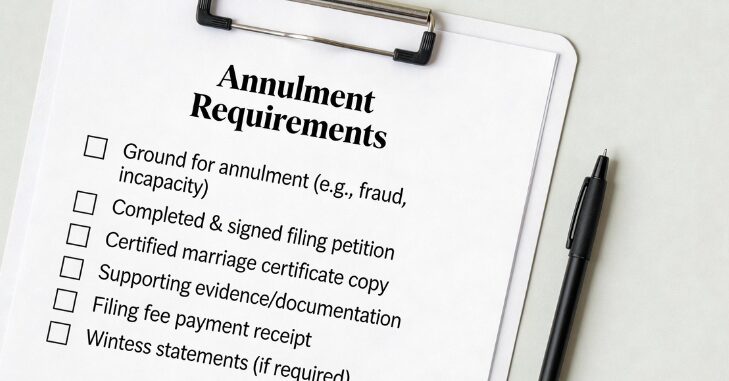
Lastly, individuals must present valid grounds for annulment, which may involve gathering substantial evidence, securing documentation, or providing witness testimony to support their claims, as courts carefully review the legitimacy of these grounds before proceeding.
Legal Procedures for Annulment
The process of obtaining an annulment usually involves several steps that vary by jurisdiction. Here is an overview of the typical procedure:
Filing the Petition
The annulment process begins with filing a petition with the appropriate court. The petition should include essential details such as the names of the parties, the date of marriage, the grounds for annulment, and any relevant supporting information. It is advisable to consult with an attorney during this stage due to the complexities involved.
Serving the Other Party
Once the petition is filed, the other spouse must be formally served with a copy of the annulment petition. This allows the other party to respond or contest the annulment. Proper service is crucial because it ensures the court has jurisdiction to rule on the case.
Response and Counter-Petition
The other party may choose to file a response to the annulment petition. In some cases, they may even file a counter-petition if they believe valid grounds for annulment exist on their side. This stage often involves legal negotiations and may lead to mediation or settlement discussions.
Court Hearings
If the annulment is contested, the court may schedule hearings to review the evidence and hear testimony from both parties. It is essential to present compelling evidence supporting the grounds for annulment during these hearings. The court will evaluate the merits of the case, taking into account witness statements and documentation.
Final Ruling
After considering the evidence and arguments presented, the court will issue a ruling on the annulment. If granted, the court will provide a formal decree of annulment, officially declaring the marriage void. This decree serves as legal documentation that individuals can use for various purposes, such as remarrying and addressing property or child custody issues.
Implications of Annulment
Understanding the implications of annulment is crucial, as it affects the legal status of both parties involved. The primary outcomes include:
- Personal Status: Following an annulment, individuals are generally returned to their pre-marital status, allowing them to remarry without concern over a previous union. This restoration can provide emotional relief, allowing individuals to move forward in their personal lives.
- Property Division: Annulment may also impact the division of property and assets. Depending on the circumstances, courts may address property distribution like divorce proceedings. However, because the marriage is considered void, the expectations for division may differ, sometimes resulting in no division at all.
- Child Custody and Support: In cases involving children, annulment does not, in itself, affect parental rights. Child custody and support must be addressed separately, often through litigation or mediation. Courts prioritize the best interests of the child, leading to decisions that ensure appropriate care and support.
- Social Stigma: While annulment offers legal clarity, it may carry social implications. Societal perceptions of annulment can vary, and individuals may face stigma or misunderstanding regarding their choice or the circumstances surrounding it. The emotional and psychological effects should not be underestimated, as individuals process their experiences differently.
Conclusion
Annulment requirements a legal remedy that allows individuals to rectify marriages that lack validity. Understanding the purpose, legal grounds, eligibility criteria, and procedures surrounding annulment is crucial for anyone considering this option. While annulment carries implications for restoring personal status, affecting property distribution, and potentially influencing child custody, it ultimately serves to provide clarity and closure for those involved.
Furthermore, the annulment process often allows individuals to move forward without the stigma of divorce, making it an appealing option for many. As societal norms and legal standards evolve, the discourse surrounding annulment will remain relevant, shaping how individuals navigate relationships and legal matters in the context of marriage.
If you want to read an interesting article about it, explore our Law category.
FAQs
You can obtain an annulment at any time if your spouse is married to someone else. You can only obtain an annulment until your spouse reaches legal age if you discover they are underage. As long as the mental illness persists, you are free to end the marriage if you wish to do so.
An annulment can only be obtained on certain legal grounds. Although these grounds differ from state to state, they typically fall into two categories: void and voidable marriages. From the very beginning, a void marriage is regarded as intrinsically unlawful and invalid. These are unions that go against basic public policy.
The primary distinction between the two is that an annulment declares a marriage invalid, while a divorce terminates a legally recognized marriage. Every marriage has the potential to end in divorce at some point, but only those that satisfy certain requirements can be dissolved through annulment.
To initiate an annulment, you must first complete and submit two legal documents to the court: a Petition and a Summons. After filing these forms, they must be formally delivered to your spouse through a process known as service of court papers. This involves a third party, an adult server, personally handing the documents to your spouse to ensure proper legal notification.