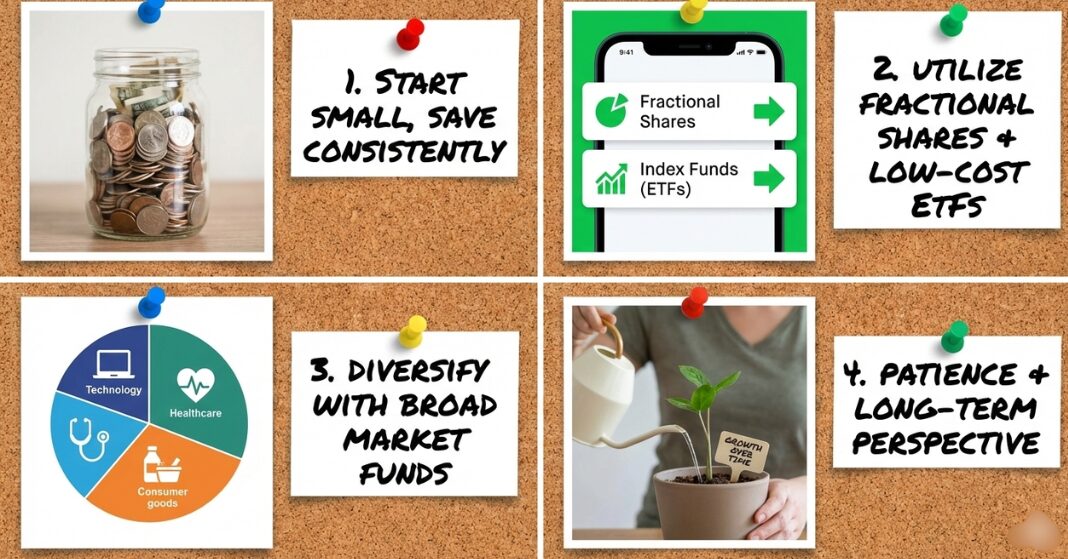

Investing in the stock market no longer requires thousands of dollars or a background in finance. Thanks to online brokerages, fractional shares, and commission-free trading, almost anyone can begin building wealth with a small amount of capital. For new investors, the biggest challenge is not access but knowing where to start and how to make informed decisions.
This comprehensive guide explores the best stocks for beginners with little money, practical investment strategies, low-cost stock ideas, and step-by-step methods to grow a portfolio safely and confidently. Whether you are starting with $50, $100, or a few hundred dollars, the right approach can help you build long-term financial strength.
| Category | Description / Examples | Benefits |
| Blue-Chip Stocks | Large, stable companies (Apple, Microsoft) | Stability, dividends, lower risk |
| ETFs | Funds tracking multiple companies (S&P 500 ETF) | Diversification, lower risk, affordable |
| Dividend Growth Stocks | Companies increasing dividends (Coca-Cola, J&J) | Regular income, compounding growth, lower volatility |
| Growth Stocks | Companies reinvesting profits (Tesla, Amazon) | High returns, higher risk |
| Technology Leaders | Innovative, profitable companies (Google, Microsoft) | Long-term growth potential |
| Consumer Staples | Essential goods (Procter & Gamble, Nestle) | Stability in downturns |
| Healthcare Companies | Pharma, biotech, medical services (Pfizer, J&J) | Growing demand, steady returns |
| Broad Market Index ETFs | Track overall market (SPY, VTI) | Diversification reduces individual stock risk |
| Common Mistakes | Chasing trends, panic selling | Minimized losses, smarter investing |
| Investment Mindset | Patience, long-term focus | Consistent growth, disciplined approach |
Why Beginners Can Start Investing with Little Money?

In the past, investing required large lump sums to purchase full shares. Today, technology has changed the landscape. Many brokerage platforms now offer:
- Fractional share investing
- Zero-commission trades
- Automatic dividend reinvestment
- Low minimum deposit requirements
- User-friendly mobile trading apps
This means beginners can buy small stakes in high-quality companies and start compounding returns early. Starting small is not a disadvantage. In fact, it reduces risk while helping new investors gain experience.
What Makes the Best Stocks for Beginners with Little Money?
Before selecting individual companies, it’s important to understand the characteristics that make certain stocks ideal for beginners.
1. Strong Financial Stability
Companies with consistent revenue growth, manageable debt, and solid cash flow tend to be safer choices.
2. Established Brand Recognition
Well-known brands often provide stability because they have loyal customers and proven business models.
3. Affordable Share Price or Fractional Access
Even if a stock is expensive per share, fractional investing allows beginners to own a small portion.
4. Dividend Payments
Dividend-paying stocks provide passive income and help compound returns over time.
5. Low Volatility
Highly volatile stocks can cause emotional decision-making. Stable companies are better for beginners. These characteristics help identify the best stocks for beginners with limited capital and reduce unnecessary risk.
Step-by-Step Guide to Start Investing
Step 1: Set Clear Financial Goals
Ask yourself:
- Are you investing for retirement?
- Do you want long-term growth?
- Are you seeking passive income?
Clear goals determine your strategy.
Step 2: Open a Brokerage Account
Choose a regulated platform with:
- No trading fees
- Fractional share options
- Educational tools
- Easy-to-use interface
Step 3: Start Small and Diversify
Avoid putting all your money into one company. Even with limited funds, you can diversify using ETFs or fractional shares.
Step 4: Invest Consistently
Small, regular contributions can outperform large one-time investments over time.
Step 5: Reinvest Dividends
Automatic reinvestment accelerates portfolio growth through compounding.
Types of the Best Stocks for Beginners with Little Money

Not all stocks are equal. Beginners should focus on categories that offer balance and long-term growth potential.
Blue-Chip Stocks
Blue-chip stocks are large, established companies with strong financial histories and proven performance records. These typically include global leaders in technology, consumer goods, or healthcare industries. They are known for their stability, consistent dividend payments, and relatively lower long-term risk, making them a solid choice for new investors.
Exchange-Traded Funds (ETFs)
ETFs allow investors to purchase multiple companies within a single investment, offering built-in diversification. They reduce the risk of buying individual stocks and provide an affordable entry point for beginners seeking broad market exposure with limited capital.
Dividend Growth Stocks
Dividend growth stocks are companies that consistently increase their dividend payouts. Beginners are often attracted to them because they provide regular income, benefit from compounding, and typically experience lower volatility than high-growth stocks.
Growth Stocks
Growth stocks are companies that reinvest profits to expand operations, develop new products, or increase market share. While they offer higher potential returns, they also carry higher risk. Maintaining a balance between growth opportunities and financial stability is essential when selecting investments, especially when working with limited funds.
Comparison of Stock Types for Beginners
| Stock Type | Risk Level | Income Potential | Growth Potential | Suitable for Beginners? |
| Blue-Chip Stocks | Low | Moderate | Moderate | Yes |
| Dividend Stocks | Low-Medium | High | Moderate | Yes |
| ETFs | Low | Moderate | Moderate | Highly Recommended |
| Growth Stocks | Medium-High | Low | High | With Caution |
| Penny Stocks | Very High | Unpredictable | Unstable | Not Recommended |
This comparison highlights safer options for beginners with limited money when searching for the best stocks.
Smart Investment Strategies for Beginners

1. Dollar-Cost Averaging
Invest a fixed amount regularly regardless of market conditions. This reduces timing risk.
2. Long-Term Mindset
Short-term trading increases risk. Holding investments long term allows growth and compounding.
3. Diversification
Spread investments across industries like:
- Technology
- Healthcare
- Consumer goods
- Finance
4. Avoid Emotional Investing
Market fluctuations are normal. Stay focused on long-term goals.
5. Focus on Fundamentals
Review:
- Revenue growth
- Profit margins
- Debt levels
- Market position
These principles help identify the best stocks for beginners with little money while avoiding unnecessary losses.
Low-Cost Stock Picks Categories to Consider
While specific stock choices may change over time, beginners can improve their investment decisions by focusing on stable and proven sectors. Technology leaders, particularly large, profitable companies with consistent innovation, often offer long-term growth potential. Consumer staples companies, which sell everyday essentials, tend to remain stable even during economic downturns, offering defensive strength to a portfolio.
Healthcare companies are another strong option, given aging populations and ongoing medical advancements that drive steady demand. Broad-market index ETFs are also an excellent choice, as they track overall market performance and reduce the risk of individual stocks.
Common Mistakes Beginners Should Avoid
- Many new investors lose money due to avoidable errors.
- Chasing Trends: Buying stocks solely because they are popular can lead to losses.
- Investing Without Research: Understanding company fundamentals is essential.
- Lack of Diversification: Investing all funds in a single stock increases risk.
- Panic Selling: Market dips are temporary; panic decisions often lock in losses.
- Ignoring Fees: Even small fees reduce long-term gains.
- Avoiding these mistakes improves your ability to select the best stocks for beginners with limited capital.
How to Grow Your Portfolio Over Time?
Reinvest Earnings
Reinvest dividends and profits to accelerate compounding.
Increase Contributions Gradually
As income grows, increase monthly investments.
Review Portfolio Annually
Rebalance investments to maintain diversification.
Stay Educated
Follow financial news, company reports, and market trends.
Consistency and discipline are more important than predicting market movements.
The Power of Compounding with Small Investments
Even small investments can grow significantly over time.
For example:
- Investing $100 monthly
- Earning an average 8% annual return
- Holding for 20 years
Can result in substantial portfolio growth.
The earlier you start, the more powerful compounding becomes. This is why choosing the best stocks for beginners with little money early in life creates long-term financial advantages.
Risk Management for Small Investors
Risk cannot be eliminated, but it can be managed.
Key methods include:
- Diversification
- Avoiding speculative stocks
- Keeping emergency savings separate
- Limiting individual stock exposure
- Maintaining long-term focus
Beginners should prioritize capital preservation before seeking aggressive returns.
Psychological Discipline in Investing

Successful investing is not only about numbers; it is equally about mindset and emotional discipline. Developing patience is essential because markets fluctuate daily, yet real wealth is built over years, not overnight. Investors must learn to ignore short-term noise, as dramatic headlines and temporary market swings can trigger unnecessary panic and impulsive decisions.
Instead, focusing on a clear, well-defined strategy helps maintain consistency and direction. Sticking to a long-term plan rather than reacting emotionally to market movements allows investors to stay on track. Emotional control is critical to maintaining steady progress, especially when building a portfolio of the best stocks for beginners with limited capital.
How Much Should Beginners Invest?
There is no universal amount. Start with what you can afford without affecting essential expenses.
A safe rule:
- Invest money you won’t need for at least 3–5 years
- Maintain an emergency fund first
Even $50 per month can create long-term growth when invested consistently.
Building Confidence as a New Investor
Confidence develops through experience and education.
To strengthen confidence:
- Track your investments
- Learn basic financial ratios
- Read annual company reports
- Study historical market trends
Gradual learning reduces fear and improves decision-making.
Long-Term Outlook for Beginners
Stock markets have historically trended upward over the long term despite short-term volatility. Economic growth, innovation, and productivity expansion support long-term investment returns. By focusing on the best stocks for beginners with little money, maintaining diversification, and investing consistently, beginners can gradually build meaningful wealth.
Final Thoughts
Investing with little money is not a limitation; it is an opportunity to learn, grow, and build financial discipline over time. The key is to focus on stable, diversified, and fundamentally strong investments rather than chasing quick profits or high-risk trends.
The best stocks for beginners with limited capital are typically established blue-chip companies, reliable dividend-paying stock, broad-market ETFs that offer instant diversification, and financially stable growth companies with long-term potential. With patience, a smart strategy, and consistent contributions, even small investments can gradually grow into a strong portfolio.
If you want to read an interesting article about it, explore our Business category.
FAQs
Very important. Patience, long-term focus, and emotional control are critical to avoiding panic selling and impulsive decisions, especially in volatile markets.
Technology leaders, consumer staples, healthcare companies, and broad market ETFs are generally safer options. They provide growth potential, stability, and diversification.
Avoid common mistakes such as chasing trends, investing without research, failing to diversify, panic selling, and ignoring fees. Focusing on stable, diversified investments is key.
The best options are usually stable blue-chip stocks, dividend-paying companies, broad market ETFs, and financially solid growth stocks. These provide stability, potential income, and long-term growth without requiring large investments.